1 Rhythm /10
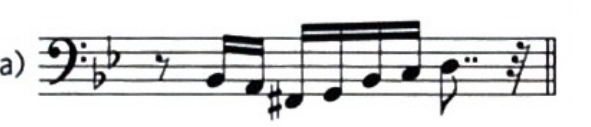
1.1(a)Circle the correct time signature for this bar.
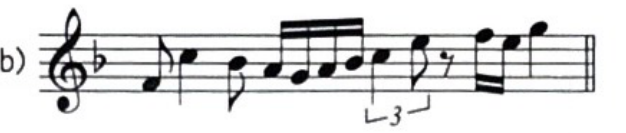
1.1(b)Circle the correct time signature for this bar.
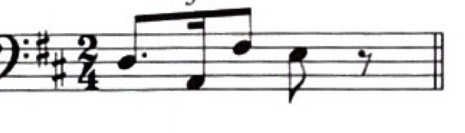
1.1(c)Circle the correct time signature for this bar.

1.2Here is a bar in simple time. Which of the following shows it correctly rewritten in compound time?
1.3Complete the following two sentences by adding a number to each.
(a) In 12/16, there are dotted-quaver beats in a bar.
(b) In 4/8, a triplet of three quavers (♪♪♪, marked 3) is equal to quaver beat(s).
1.4Tick one box to show which bar is grouped correctly.
1.5Tick (✓) or cross (✗) each box to show whether the rests are correct or incorrect.

bar 1
bar 2
bar 3
2 Pitch /10
2.1Tick one box to show the name of this note.
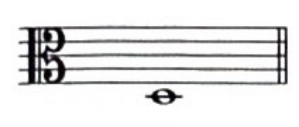
2.2Tick one box to show the correct enharmonic equivalent of this note.
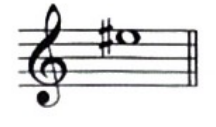
2.3Here is a bar written for the cor anglais (given). It has been transposed down a perfect 5th to be at sounding pitch (below). There are some mistakes — tick (✓) or cross (✗) underneath the key signature and each note.
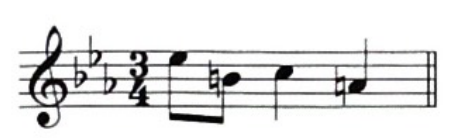
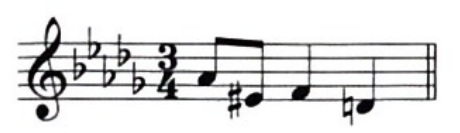
key sig.
note 1
note 2
note 3
note 4
2.4Compare bars A, B and C, then choose TRUE or FALSE for each statement.
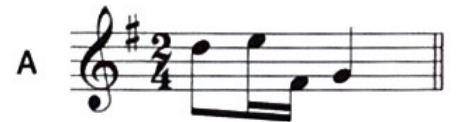
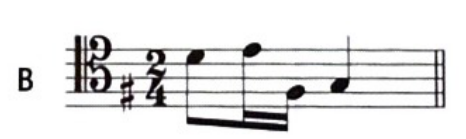
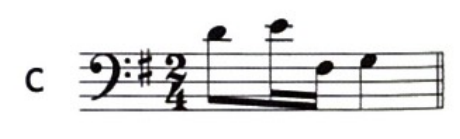
(a) B and C are at the same pitch
(b) A is one octave lower than C
(c) B is one octave higher than A
3 Keys and Scales /15
3.1Tick one box to show the correctly written key signature of B major.
3.2Tick one box to show the correctly written key signature of E♭ minor.
3.3(a)Circle the correct key of this melody.

3.3(b)Circle the correct key of this melody.

3.3(c)Circle the correct key of this melody.

3.4Tick one box for X and one box for Y to show which notes are needed to complete the scale of B♭ melodic minor.

X
Y
3.5(a)Circle one clef to form a minor scale.

3.5(b)Circle one clef to form a minor scale.

3.5(c)Circle one clef to form a minor scale.

3.6(a)This is the correctly written chromatic scale beginning on A♯.

3.6(b)This is the correctly written chromatic scale beginning on E♭.

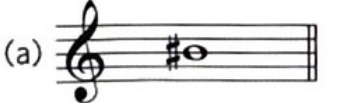
3.7(a)This is the supertonic in C♯ minor.
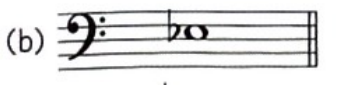
3.7(b)This is the submediant in G♭ major.
3.7(c)This is the mediant in F minor.
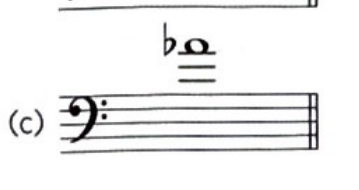
4 Intervals /10
4.1(a)Tick one box to name this interval.
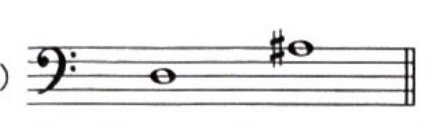
4.1(b)Tick one box to name this interval.
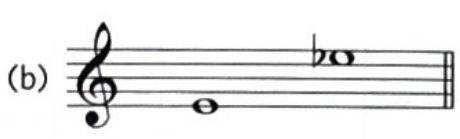
4.1(c)Tick one box to name this interval.
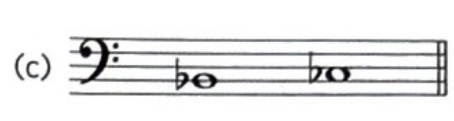
4.2(a)Circle the type of this interval.
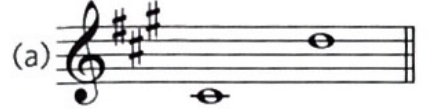
4.2(b)Circle the type of this interval.
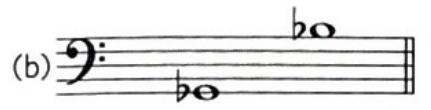
4.2(c)Circle the type of this interval.
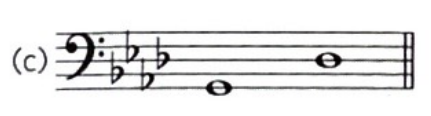
4.3(a)Name the note that is a major 9th higher than the given note (e.g. "G" or "G#").
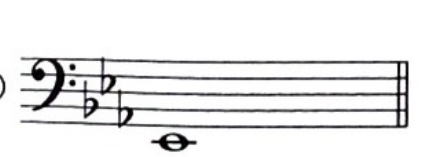
4.3(b)Name the note that is an augmented 4th higher than the given note.
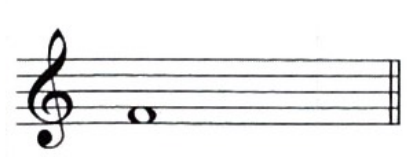
4.3(c)Name the note that is a compound minor 3rd higher than the given note.
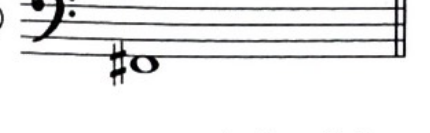
4.3(d)Name the note that is a perfect 8th/8ve higher than the given note.
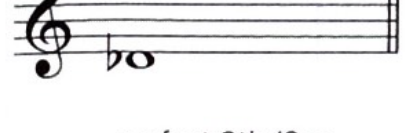
5 Chords /10
5.1Indicate suitable chords in the two cadences by choosing I, II, IV or V for each of the five boxes.

box 1
box 2

box 3
box 4
box 5
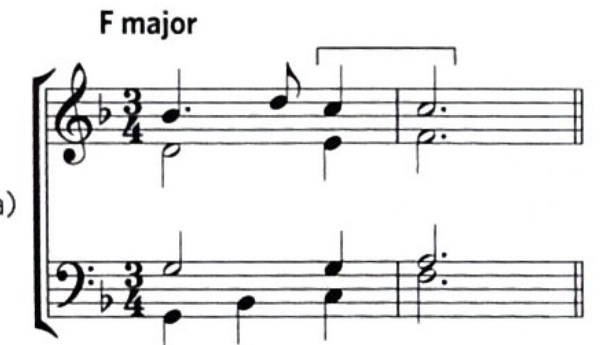
5.2(a)Name this cadence (F major).
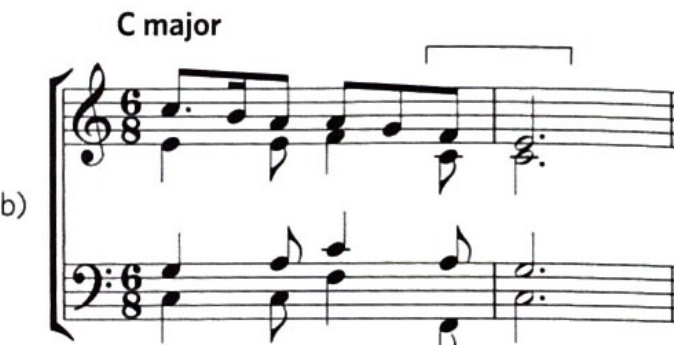
5.2(b)Name this cadence (C major).
5.3Tick one box to name each of the three marked chords. The key is F♯ minor.
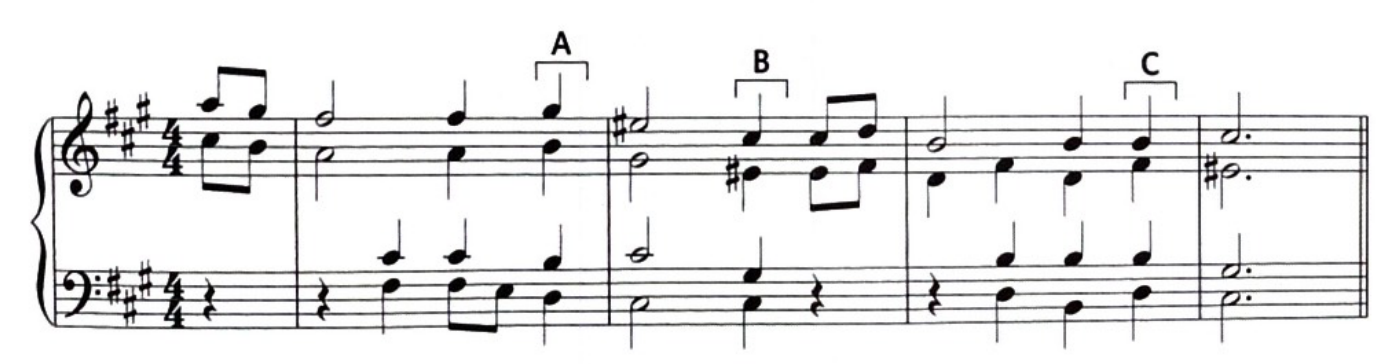
(a) Chord A
(b) Chord B
(c) Chord C
6 Terms, Signs and Instruments /10
6.1risoluto means:
Schnell means:
dolce means:
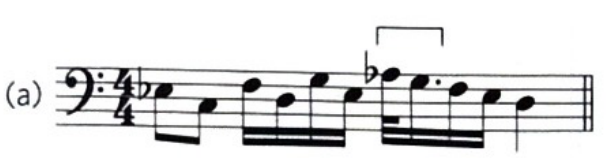
6.2(a)Name this written-out ornament (marked with a bracket).
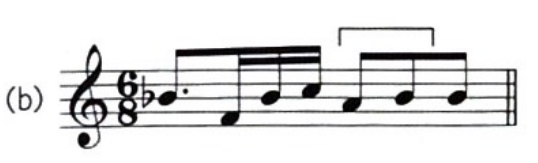
6.2(b)Name this written-out ornament (marked with a bracket).
6.3(a)A cello can be played 'con sord.'
6.3(b)The bassoon is the lowest-sounding brass instrument.
6.3(c)A soprano voice has a higher range than an alto voice.
6.3(d)The harp is a string instrument.
6.3(e)The timpani produce sounds of indefinite pitch.
7 Music in Context /10
Study this music for oboe and piano and then answer the questions that follow. (아래 악보를 참고하여 7.1~7.5에 답하세요.)
Allegro ritmico ♩=120
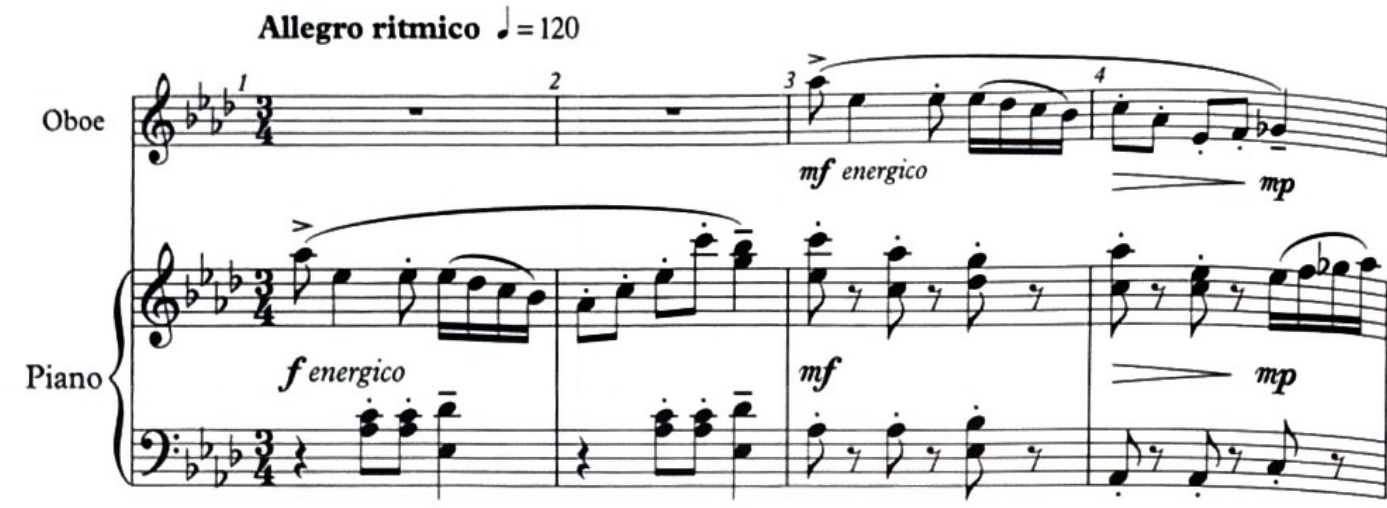
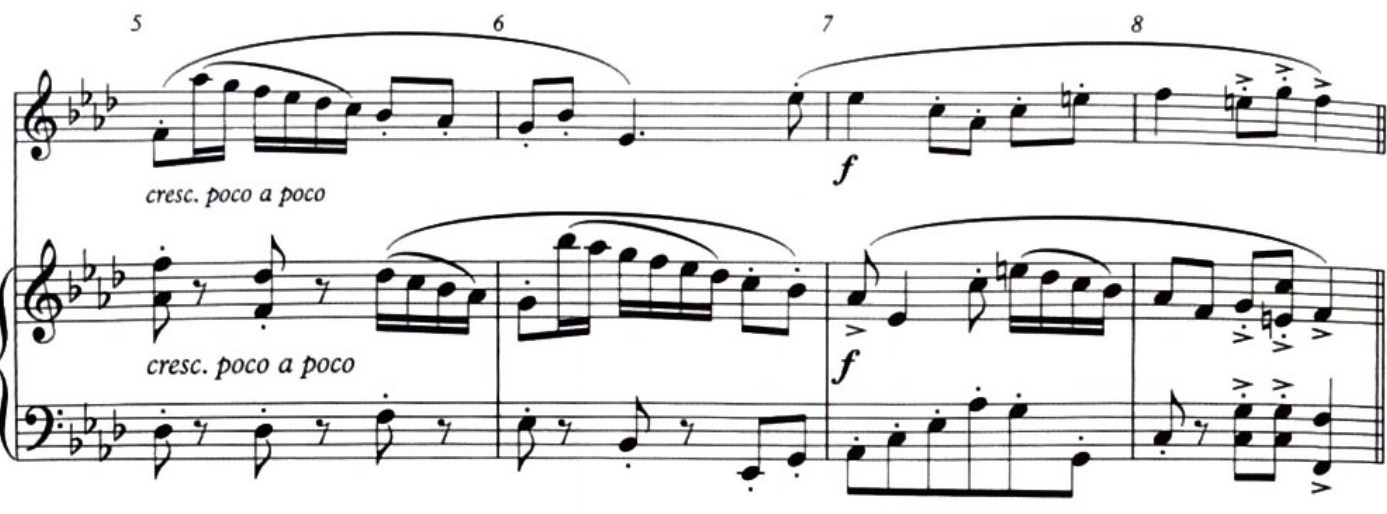
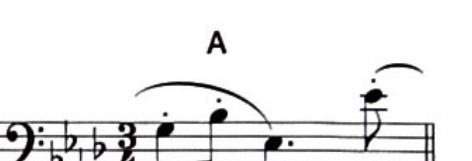
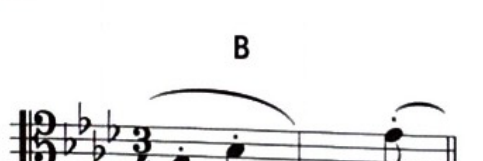
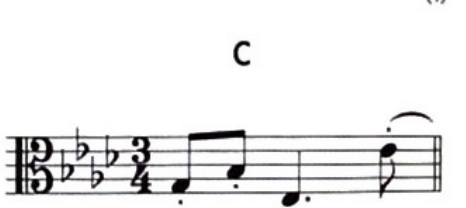
7.1Compare bars A, B and C to bar 6 of the oboe part, then choose the one correct statement.
7.2(a)The music should be played energetically.
7.2(b)The music gets gradually quieter in bars 5–6.
7.2(c)All of the notes in bar 8 can be found in the key of F minor.
7.2(d)The notes of the oboe part of bar 3 are the same as those of the right-hand piano part in bar 1.
7.2(e)The lowest note in the left-hand piano part is E.
7.3Which instrument is best suited to play bars 3 to 6 of the oboe part so that it sounds at the same pitch?
7.4How many times does the dominant in the key of A♭ major appear in bars 1–4 of the right-hand piano part?
7.5Complete the following two sentences by adding a number to each.
(a) There is an interval of a minor 10th between two adjacent notes in bar of the oboe part.
(b) All the notes in bar of the piano part are marked to be played staccato.